AI Is (Mostly) Memorization
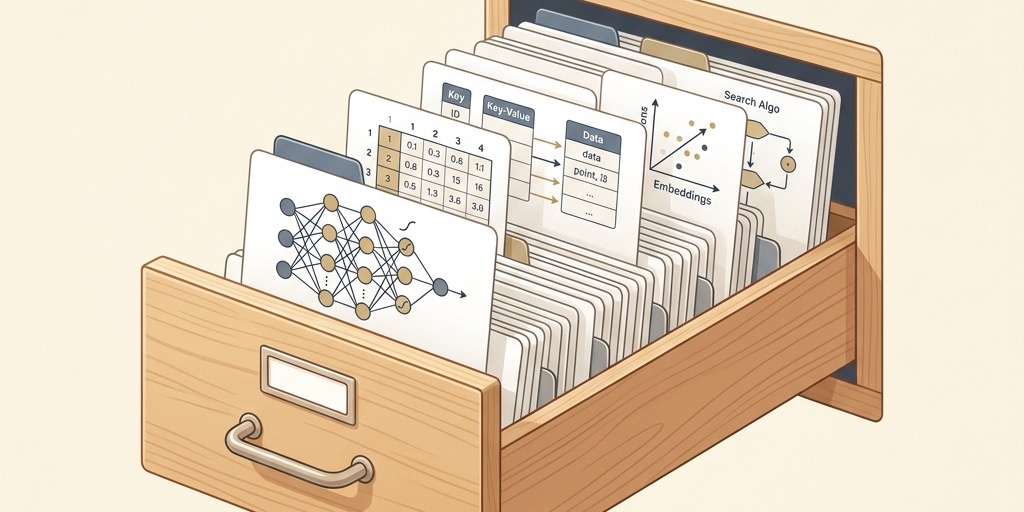
The term Artificial Intelligence comes from a bold ambition: to build machines that can think, understand, and reason about the world the way humans do.
Recently, that ambition feels very close. Recommendation systems seem to know exactly what we want before we do. Computer vision models detect faces, objects, and tumors more accurately than ever. Large language models write essays, generate code, summarize reports, and even support scientific research.
So where does this power actually come from? How does AI learn, reason, and solve problems?
After more than 15 years working in this field, my answer is simple: AI mostly memorizes.
I want to explain the source of power of AI and its inherent limitations in a four article series:
- AI Is (Mostly) Memorization - this article
- Why memorization works
- How far memorization can go
- Where memorization ends and real innovation begins
What "learning" actually means
Most successful AI systems we see today are built on machine learning. The word “learning” implies understanding, reasoning, or discovering, like a student or a scientist figuring out how the world really works
In practice, most AI systems do something simpler:
They remember patterns from the past and reuse them when the present looks similar. That’s what learning usually means.
A face recognition system captures patterns of visual similarity between faces through vector computation. It memorizes how the same face changes under different lighting, angles, ages, and expressions.
A recommendation system tracks your behavior and compares with millions of others. Based on what you clicked, watched, bought, and ignored, then gives the closest recommendation, without really know who you are and what your taste is.
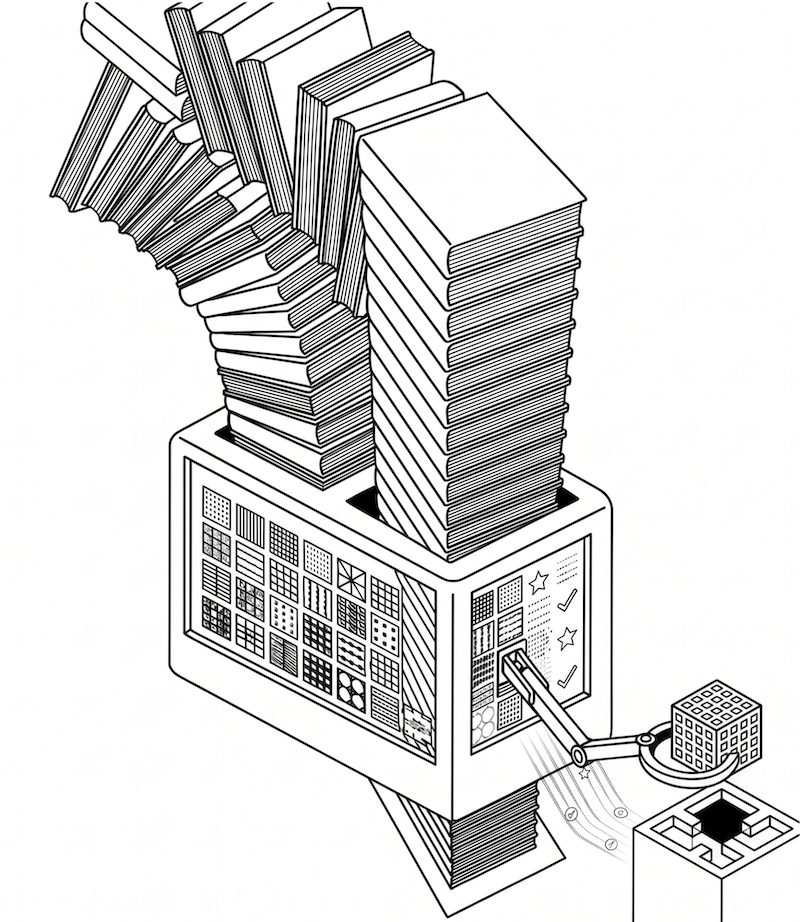
A large language model generates text by following statistical patterns: which words tend to follow others, what arguments commonly come next, how explanations are usually structured, and what kinds of responses have worked for similar questions.
In each case, the AI system works not because it understands the world, but because it has stored enough patterns from the past to produce a good answer now.
That is what I mean by memorization.
AI models that are built to memorize
Many of the most important models in machine learning are purposely built to store the past and look it up later. Here are three examples that span decades of AI research:
- K-Nearest Neighbors (KNN), developed in the 1950s, is a simple and effective memorization engine. The model just stores all training examples. When a new input arrives, it finds the closest matches, retrieves the memorized labels, and generates the prediction through majority voting. It is the foundation of modern algorithms such as Collaborative filtering, and the the now popular Retrieval Augmented Generation (RAG) systems.
- Linear regression is the simplest form or regression in statistics and machine learning. Linear regression or regression for more complex functions is still a compact form of memorization. Instead of remembering every example, it compresses training data into a small set of parameters. Those parameters capture relationships that repeatedly appeared in the past. "Learning" becomes the process of adjusting those parameters to make the memory accurately.
- Transformers, the architecture behind modern large language models, memorize at two levels. First, feed-forward layers act as static long-term memory. They operate as key-value lookup tables, where global facts and rules are encoded into weights during pre-training. Second, attention mechanism provides dynamic short-term memory over the context window, which selects the most relevant information that impacts the generation of the output token. There is a technical blog where you can learn the evolution of memory systems from GPT-2 to Kimi K3, how they are designed to "memorize" efficiently while "forgetting" necessarily.
From the simplest classifier to the largest language model, the underlying recipe is the same: store information from the past in some reusable form, then retrieve and combine it when needed. What changes across models is how the past is stored and how flexibly it can be reused.
A broader view of memorization
The word memorization might sound narrow, like recalling a poem or a phone number.
But in real life, human expertise depends heavily on it. A software engineer builds up intuition about system behaviors, failure modes, and debugging strategies across many projects. A physician recognizes patterns from years of patient cases. A chess master quickly identifies board positions and strategies from experience.
More generally, what gets memorized can take different forms
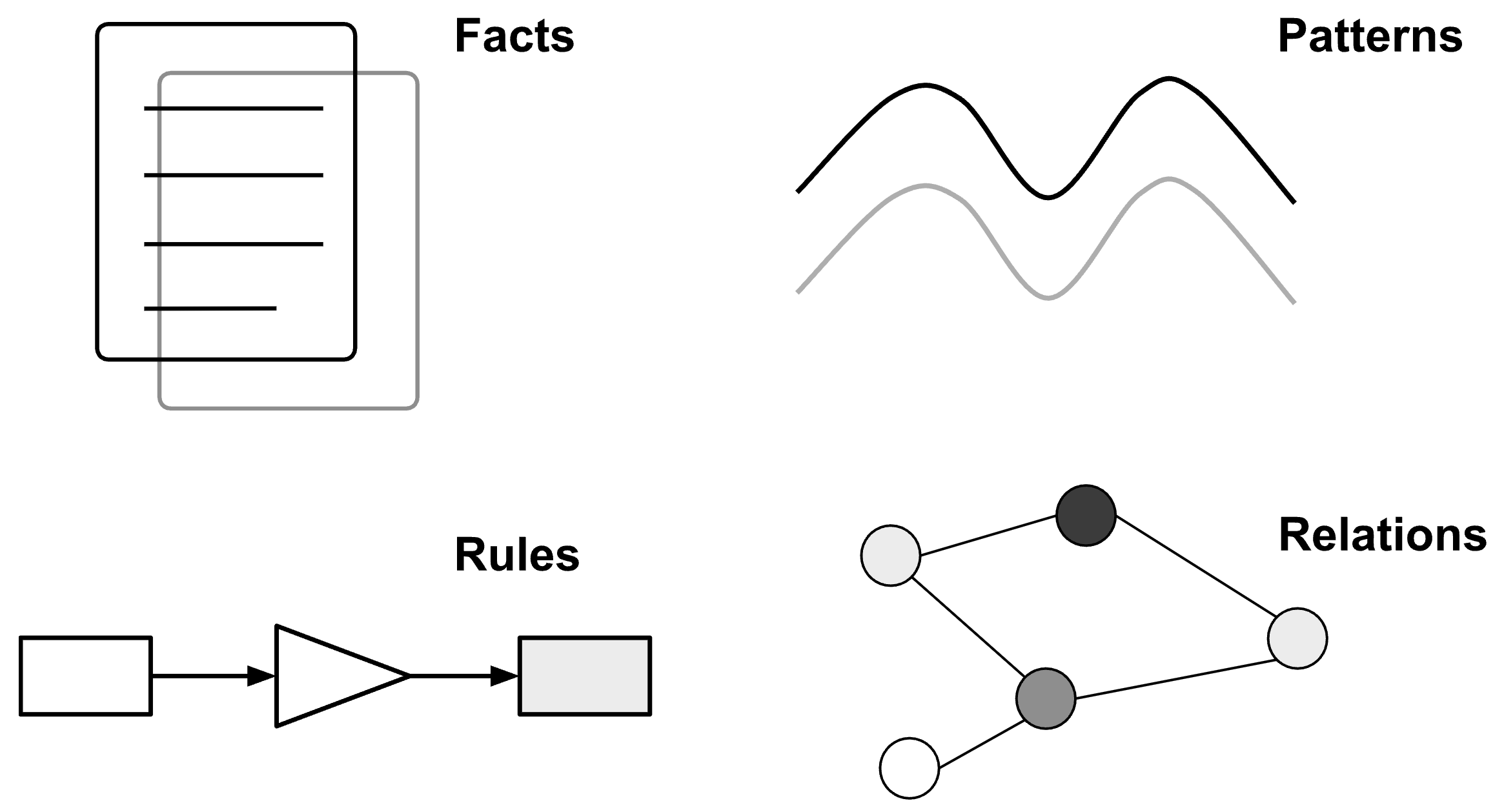
- Facts: specific examples
- Patterns: repeated structures
- Rules: useful procedures or heuristics
- Relations: associations and dependencies
So we can already see a more generic definition: memorization is retaining information from the past in a form that can be reused later.
Why AI can look creative
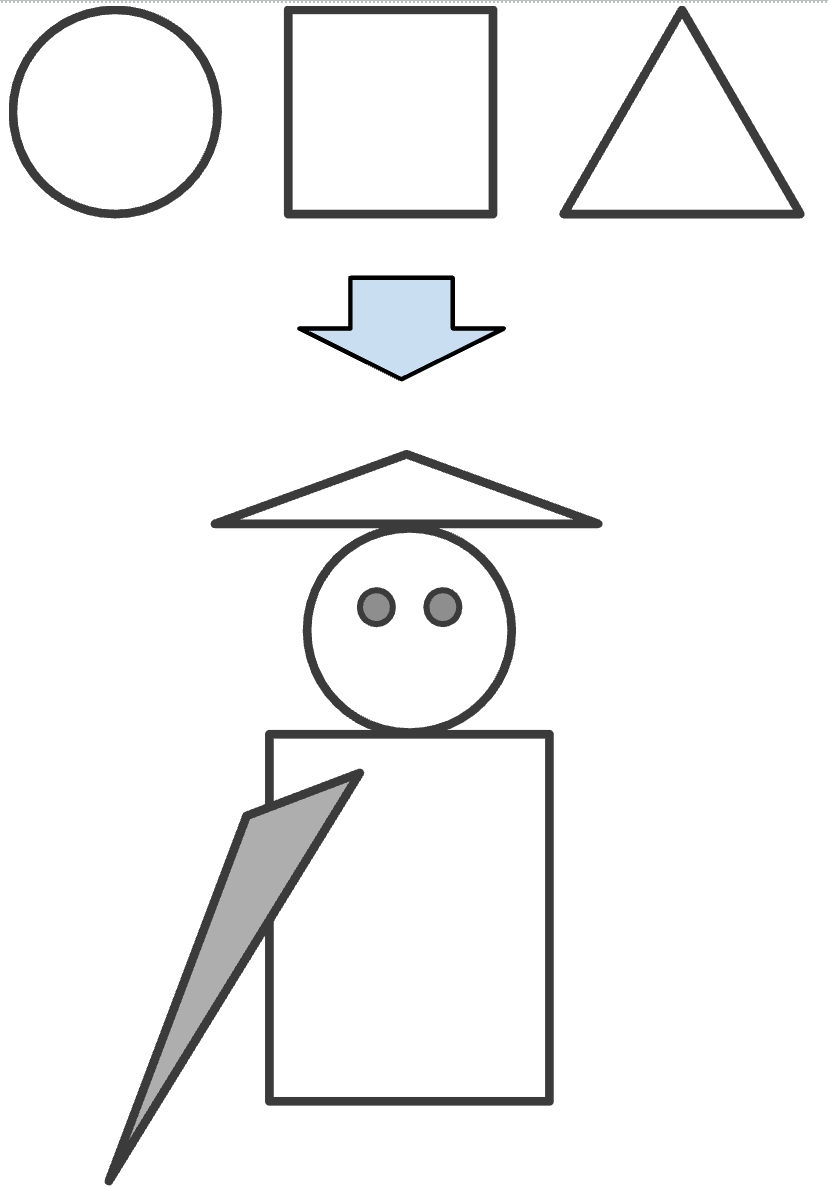
If AI is just memorizing, how can it produce outputs that seem new? How can it answer questions it has never seen or create images that never existed?
Because new outputs can be built from existing pieces.
Even when a request is new, the model has usually seen many related components: similar questions, nearby facts, common formats, and typical ways people solve problems.
The exact input and output may be new. But the process is still based on recombining stored patterns. Novelty doesn't always require deep understanding. Often, it only requires enough material to assemble a useful response in a new context.
Recombining patterns at scale is a big part of what makes modern AI powerful.
The real question
So the most interesting question is not "Can AI think like a human?"
The more useful question is: Why does memorization work so well for AI?
Why can systems trained on past data perform well on future tasks? Why are language, faces, preferences, markets, and decisions predictable enough for this approach to succeed?
This question will be answered in the next article: Why memorization works.